
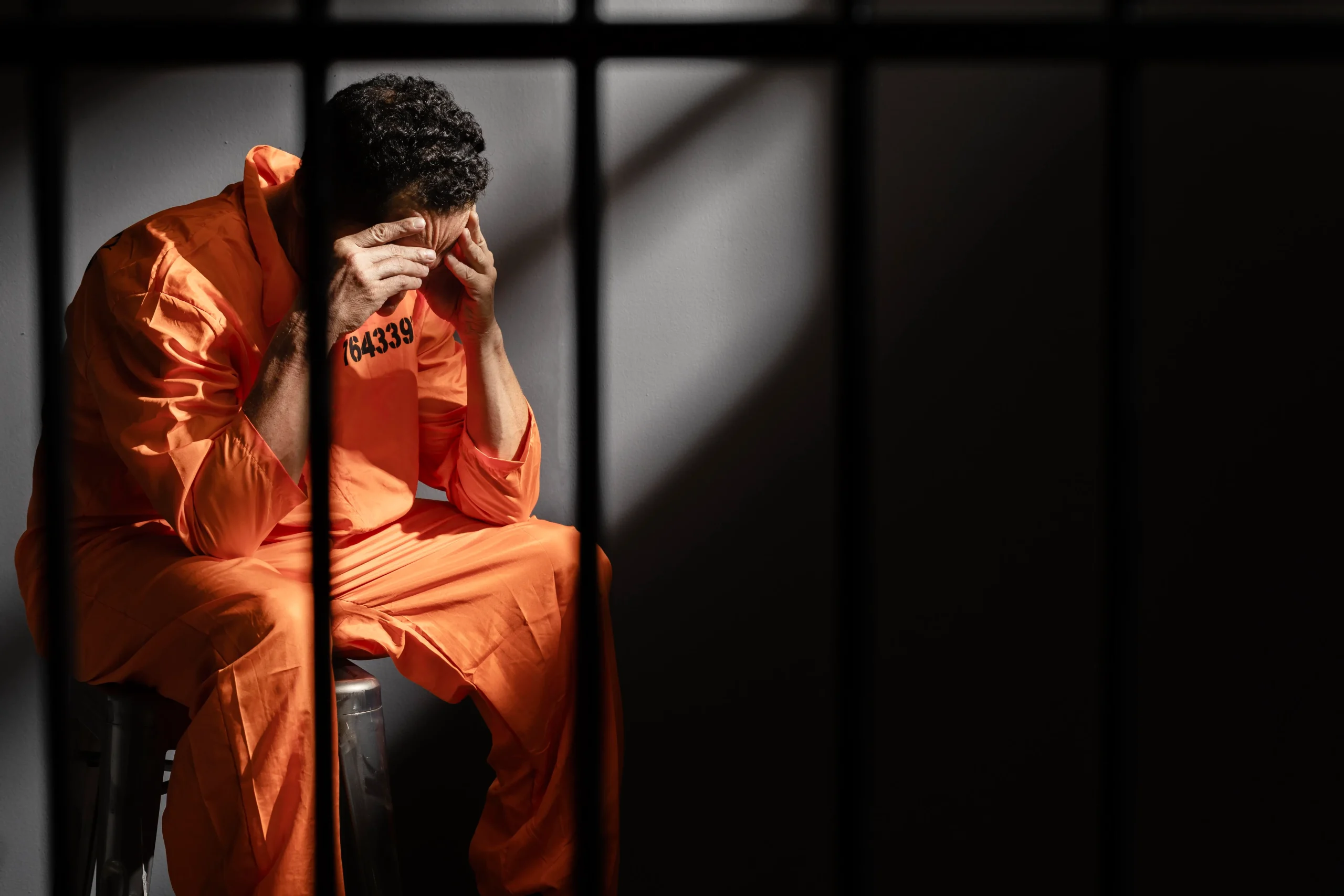
When any of us imagine prison, we imagine what we’ve watched in the movies, clanging bars, yard fights, and maybe some flexing of tattooed muscles in slow motion. Prison has been made to look like a cinematic, sometimes even a romantic adventure, with brooding anti-heroes and tortured redemption arcs. But come on: real prison life is far from a movie thrill. It’s raw, mundane, and brutally real.
This is not Shawshank. This is life.
The First Day: Shock, Not Solitude
There is no over-the-top soundtrack playing when you first go into prison. Just the creak of the doors slamming shut behind you with a cold finality. The air changes, heavy with fear, sweat, bleach, and something you can’t quite put your finger on. It’s not loneliness you notice first. It’s confusion.
You’re given a number. Your name matters less now. You’re treated as property, stripped, searched, and given clothes that never quite fit. Welcome to your new world.
No one prepares you for how loud it is. Metal against metal, yelling, guards screaming orders. There is no “quiet moment” to collect yourself or locate yourself. That comes later, perhaps.
The Routine: Crushing and Comforting
Prison is routine. It operates like a clockwork because in a small space, chaos is hazardous. Wake-up calls, head counts, chow time, work details, everything is scheduled for the second. And if you get the timing wrong, it can be disastrous.
Oddly, the routine can become a strange comfort. Your world is small, and in that smallness, predictability is a shield. You start to know which officers fair and which ones are itching for a reason. You learn who to nod to in the yard and who to avoid. You develop survival skills, not necessarily violent ones, but psychological ones. You read people like books with torn covers.
The People: Friends, Enemies, Ghosts
All jails are different, but wherever you’re headed, people are the same: the old-timers who’ve done a dozen calendars, the newbies who’re not crying themselves to sleep, the hustlers operating their own little economies, and the ones who’ve lost all hope.
You can make friends. You can make enemies. Often, they are the same. Trust is not something that comes easily, and vulnerability is something you cannot risk losing. A thoughtless comment in the wrong ear can haunt you for weeks.
And then there are the ones who disappear without leaving, present physically but mentally gone, wandering the yard like ghosts.
Mental Games: The Real Sentence
That’s the part the films do not show: the battle in your own mind. You can manage the walls, the sound, even the threat. But the thoughts? The shame? The self-hatred, the remorse, the perpetually recirculating “what ifs”? That’s the true sentence.
Time crawls in prison. An hour feels like a minute when you’re holding your breath for a letter that never comes. A year passes, and the world outside forgets your name. Friendships fade. Some disappear. Children grow up. People die. And you’re still in that cell, counting ceiling tiles and not wanting to crack.
There are times when silence is too much to bear – not that it’s quiet, but that it’s hollow.
Small Freedoms: The Things That Keep You Going
In this gray sameness, small things are huge. A good book. A hot meal that isn’t mystery meat. A visit. A call. A laugh. A new toothbrush. Sunlight on your face.
For others, religion is a raft in the storm. For others, it’s working out, writing, drawing, or dreaming. Anything that makes the walls feel a little wider, the time a little faster.
There was one man, though, who used to sketch whole cities on the back of an envelope and create a world where he was a free man. Another taught me chess and defeated me every time. “It’s the only place where I can still out-think the system,” he said.
The Release: Not What You Think
And when you finally exit? Don’t wait for a sunset or swelling theme. Freedom can be as frightening as captivity. You come out with a duffel bag, maybe some cash if you are lucky, and a mind that doesn’t know the way around. You’ve evolved but so have the world. The readjustment is not simple. Employers look askance. Families keep their distance. You’re always trying to demonstrate that you’re not what you used to be. And sometimes… you’re not even sure you know yourself.
Conclusion
Never Walk Alone could be seen as a real-life lesson to always remember that togetherness, determination and humanity is stronger than the power of distance. Randal Smith is a forceful storyteller who takes the reader through a story of despair, recovery and hope, proving that even at our lowest we are never alone. Each chapter beats with life, strength and the determination to move on.Pick up your copy of Never Walk Alone by Randal Smith today, available now on Amazon, and discover the transformative power of walking life’s path together.